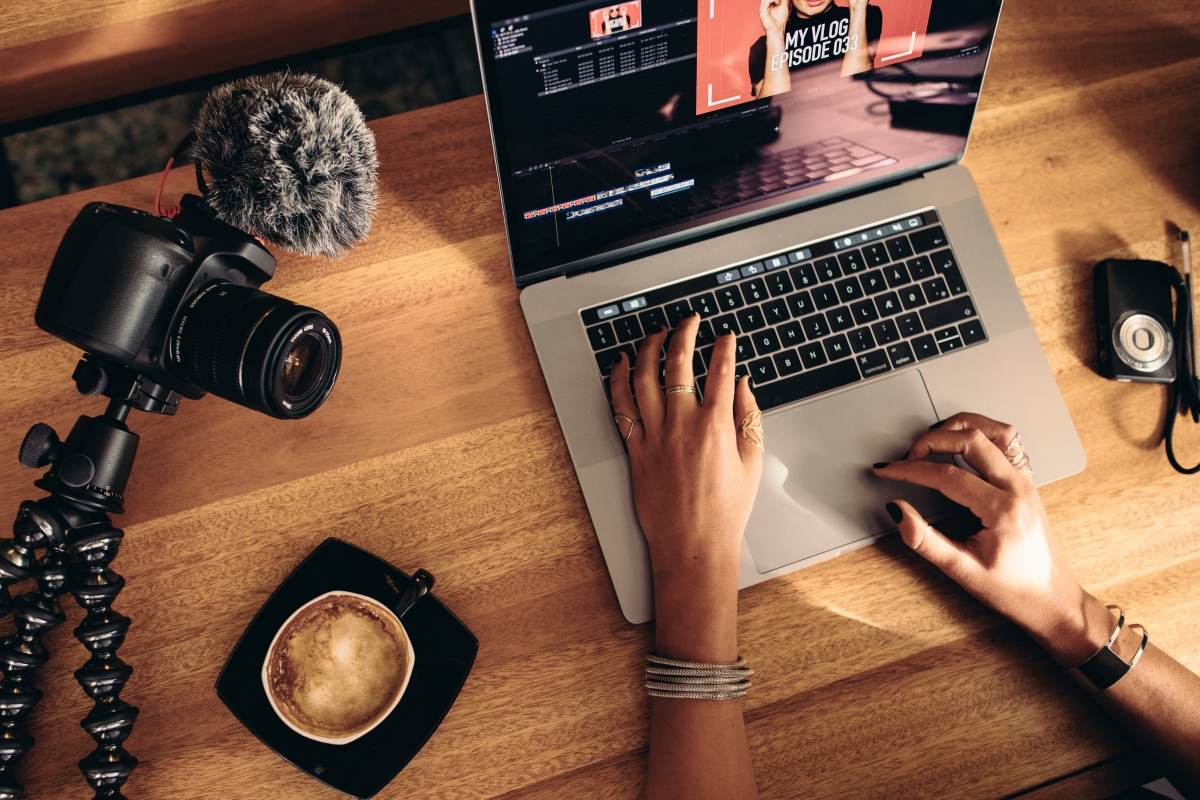
The Panasonic GH5 is a top choice for videographers and content creators. It’s known as a 4K video camera and mirrorless camera. But, there’s a growing need to convert 4K footage to 1080p for better compatibility and smaller file sizes.
Downscaling is key for working with older devices and saving space. It can be tricky, but with the right methods, it’s achievable.
Key Takeaways
- Understand the importance of downscaling 4K footage to 1080p.
- Learn the best practices for downscaling using various software.
- Discover how to maintain video quality during the downscaling process.
- Explore the benefits of downscaling for videographers and content creators.
- Find out how to efficiently downscale 4K footage using the Panasonic GH5.
Understanding the Panasonic GH5 4K Capabilities
The Panasonic Lumix GH5 is a top choice for 4K video. It has advanced features that help videographers get high-quality footage.
The GH5’s 4K Recording Formats and Options
The GH5 offers many 4K recording formats. It can record in Cine-D or V-Log modes. These modes give a wide dynamic range and flexibility in color grading.
The camera also supports 4:2:2 10-bit color sampling. This is key for high-quality 4K footage. For more tips on video editing, check out video editing resources.
- 4K resolution at 60p
- 10-bit 4:2:2 color sampling
- Cine-D and V-Log recording modes
Benefits of Shooting in 4K for 1080p Delivery
Shooting in 4K and then downsizing to 1080p has many benefits. It improves image quality and reduces noise. The GH5’s 4K features also make post-production easier.
Editors can crop, pan, and zoom without losing quality. Professionals say, “Shooting in 4K gives a level of detail that’s hard to get with 1080p.”
“Shooting in 4K provides a level of detail that is hard to achieve with native 1080p recording.”
The 1080p footage from the GH5 is sharper and more detailed. It’s perfect for various platforms. By using the GH5’s 4K features, creators can make sure their footage looks great, whether for TV, the web, or other media.
Why Downscale from 4K to 1080p?
Working with 4K footage from the Panasonic GH5 has its perks. Downscaling to 1080p can be beneficial for several reasons. The GH5 is known for its exceptional 4K recording capabilities, making it a top choice for videographers. But, deciding to downscale involves considering a few factors.
File Size and Storage Considerations
One big reason to downscale is to make files smaller. This makes storing and managing them easier. 4K files are much larger than 1080p files. Downscaling helps with storage issues, especially for projects with lots of footage.
Delivery Requirements for Different Platforms
Video resolution needs vary across platforms. Some platforms still want 1080p, while others are moving to 4K. Knowing these delivery requirements is key. The Panasonic GH5’s GH5 specs make it great for different formats.
Performance Benefits on Older Systems
Downscaling to 1080p also boosts performance on older systems. Editing 4K footage needs powerful hardware. Downscaling lets you work better on less powerful machines. This ensures smoother playback and faster editing.
The Panasonic GH5 is often seen as the best camera for videography. A detailed Panasonic GH5 review would show its strengths in 4K and 1080p. It’s a versatile tool for professionals.
Preparing Your Panasonic GH5 Footage for Downscaling
Before you start downscaling your Panasonic GH5 footage, make sure your 4K is ready. This means knowing the best camera settings and following file management tips.
Optimal Camera Settings for 4K Acquisition
To get the best 4K footage from your GH5, set your camera right. Choose the right 4K resolution and frame rate for your project. The GH5 has formats like 4K Cinema 4:2:2 10-bit for color grading.
Also, pick the highest quality codec like ALL-Intra or LongGOP. Good exposure and focus are key. Use zebra patterns and focus peaking to improve your footage.
File Management Best Practices
Good file management is crucial with 4K footage from your GH5. Organize your files in a clear folder structure. Use metadata to label your clips for easy editing.
Back up your files often to avoid loss. Use external hard drives or cloud storage. A well-organized file system makes downscaling easier and reduces errors.
Essential Hardware Requirements for Efficient Downscaling
To downscale 4K videos from the Panasonic GH5 efficiently, you need the right tools. This task is very demanding and needs a strong system to process the video well.
Reliable Computer Specifications
A good computer for downscaling 4K videos should have a multi-core processor, at least 16 GB of RAM, and a dedicated graphics card. For example, an Intel Core i7 or AMD Ryzen 7 processor works well. Pair it with an NVIDIA GeForce or AMD Radeon graphics card.
| Component | Minimum Requirement | Recommended |
|---|---|---|
| Processor | Quad-core | Hexa-core (e.g., Intel Core i7) |
| RAM | 16 GB | 32 GB or more |
| Graphics Card | Dedicated GPU | NVIDIA GeForce or AMD Radeon |
| Storage | 512 GB SSD | 1 TB or larger SSD |
Storage Solutions for 4K Footage
For 4K footage, high-capacity SSDs are best because they are fast. You can also use external storage like RAID arrays for big projects.
External Processing Options
eGPUs (external Graphics Processing Units) can boost your computer’s power, especially for laptops. They help speed up video encoding and rendering.
Getting the right hardware makes downscaling your Panasonic GH5 4K footage to 1080p much easier and faster.
Software Options for Downscaling GH5 Footage
There are many software options for downscaling GH5 4K footage to 1080p. You can choose based on your needs and budget. The goal is to find software that balances quality, speed, and cost well.
Professional NLE Solutions
Adobe Premiere Pro and Final Cut Pro X are top choices for professionals. These Non-Linear Editing (NLE) systems have advanced features. They include high-quality downscaling, color grading, and audio editing.
They support many formats and handle complex projects easily.
Free and Budget-Friendly Alternatives
If you’re on a tight budget, consider DaVinci Resolve and Shotcut. They offer great downscaling features. DaVinci Resolve is especially loved for its color correction and audio tools, making it a hit with indie filmmakers.
Dedicated Transcoding Software
HandBrake and FFmpeg are great for downscaling. They’re designed for transcoding and work fast on big files. They have many presets and options for different needs.
| Software | Primary Use | Cost |
|---|---|---|
| Adobe Premiere Pro | NLE | Subscription-based |
| Final Cut Pro X | NLE | One-time purchase |
| DaVinci Resolve | NLE/Color Grading | Free/Paid upgrade |
| HandBrake | Transcoding | Free |
Step-by-Step Downscaling in Adobe Premiere Pro
Premiere Pro makes downscaling 4K footage from the Panasonic GH5 to 1080p easy. It keeps your video quality high. This guide will show you how to do it well.
Setting Up Your Project
To downscale your GH5 4K footage, first, make a new project in Adobe Premiere Pro. Make sure your project settings match your footage. For 4K, set the resolution to 3840 x 2160.
Go to File > New > Project. Under Video, set the resolution right.
Also, pick the right Timebase and frame rate for your GH5 footage. It’s usually 24fps or 30fps.
Import and Sequence Settings
After setting up your project, import your GH5 4K footage. Go to File > Import. Then, make a new sequence by choosing File > New > Sequence.
Pick a sequence preset that fits your footage. Or adjust the settings to match your 4K video.
- Make sure the frame rate and resolution match your footage.
- Set the Timebase to 24fps or 30fps as needed.
Export Settings for Optimal Quality
To downscale your 4K footage to 1080p, adjust the export settings. Go to File > Export > Media. Choose the H.264 format and set the resolution to 1920 x 1080.
For the best quality, use the High profile and Level 4.2 or higher. This works well with most modern devices.
Using Media Encoder for Batch Processing
Adobe Media Encoder is great for processing many files at once. After making your sequence in Premiere Pro, send it to Media Encoder. Choose File > Export > Media Encoder.
In Media Encoder, add multiple files and set the export settings as needed.
“Using Media Encoder for batch processing can significantly streamline your workflow, allowing you to downscale multiple 4K videos to 1080p efficiently.”
Downscaling in Final Cut Pro X
Final Cut Pro X is a top choice for professionals. It helps downscale GH5 4K footage to 1080p for different needs. Its features and easy-to-use interface are perfect for editing high-resolution videos.
Project and Library Setup
To downscale your GH5 footage, start by setting up your project and library in Final Cut Pro X. Create a new library and project that match your footage’s settings. Make sure your project settings are set for 4K resolution for downscaling.
Optimal library settings are key for smooth video processing. Final Cut Pro X lets you tailor libraries for your workflow. This includes settings for storage and proxies.
Optimizing Export Settings
When exporting, Final Cut Pro X offers settings for 1080p delivery. Choose the right codec, frame rate, and resolution. For GH5 footage, Apple ProRes is a good choice for quality and size.
Frame rate is also important. If your GH5 footage is at 24fps or 30fps, keep this frame rate for the best 1080p quality.
Compressor Integration for Advanced Options
For advanced export options, Final Cut Pro X works well with Compressor. This lets you customize export settings further. Compressor is great for creating presets for different platforms like broadcast, web, or mobile.
With Compressor, you can also use HDR to SDR conversion. This is useful if you have HDR GH5 footage and need to convert it to SDR for some platforms.
Batch Processing for Maximum Efficiency
Mastering batch processing is key for video editors working with high-resolution footage like the Panasonic GH5’s 4K output. It lets you downscale multiple files at once. This saves a lot of time on tedious tasks.
Setting Up Watch Folders
Setting up watch folders is a great way to use batch processing. You choose folders for your 4K files. The software then finds new files and starts downscaling them automatically.
In Adobe Premiere Pro, the Media Encoder makes this easy. It lets you queue files for downscaling. This makes the process automated and less work for you.
Automating Downscaling Workflows
Automation is crucial for efficient batch processing. By making a workflow that downscales GH5 4K footage to 1080p, you save a lot of time. Tools like FFmpeg or video processing software can help with this.
| Software | Automation Feature | Downscaling Capability |
|---|---|---|
| Adobe Premiere Pro | Yes, via Media Encoder | Yes, to various resolutions |
| FFmpeg | Yes, command-line automation | Yes, to various resolutions |
| Final Cut Pro X | Yes, via Compressor | Yes, to various resolutions |
Scheduling and Resource Management
Managing your system’s resources well is important. Scheduling batch processing for off-peak hours prevents overloading your computer. This ensures other tasks can run smoothly.
You can schedule batch processing for overnight or breaks. This way, you use your system’s power without stopping your work.
Codec Selection and Quality Preservation
When you downscale 4K footage to 1080p, picking the right codec is key. The Panasonic GH5 is great for 4K video. You need to choose a codec that keeps the quality high but also keeps the file size down.
Understanding Different Codecs for Delivery
There are many codecs for video delivery, each with its own benefits and drawbacks. H.264 is popular because it balances quality and file size well. H.265 offers even better compression, making files smaller without losing too much quality. Knowing the differences between these codecs is important for making the right choice.
Balancing Quality and File Size
When you downscale 4K footage, finding the right balance between quality and file size is crucial. Higher quality means bigger files, while more compression can lose some quality. You need to find the sweet spot for your project.
For example, if you’re streaming content, you might need to adjust your codec settings to fit the platform’s requirements.
Advanced Settings for Professional Results
For top-notch results, you should look into advanced codec settings. Settings like bitrate, GOP structure, and entropy coding can greatly affect the final video. For instance, tweaking the bitrate can control file size, while adjusting the GOP structure can improve compression.
By fine-tuning these settings, you can get a high-quality downscaled video that meets professional standards.
Conclusion
Downscaling 4K footage from the Panasonic Lumix GH5 to 1080p is key for different platforms. Knowing the GH5’s features and using the right tools helps get great results.
The Panasonic Lumix GH5 is a top-notch mirrorless camera for 4K video. It’s important to pick the right codec and manage file size and quality. This ensures your video looks good on any platform.
With the tips from this article, you can easily downscale your GH5 4K footage to 1080p. This is perfect for both pros and hobbyists. Learning this skill will make your GH5 videos look amazing.